John Hejduk's Bye House: A Situated Object
John Hejduk's Bye House: A Situated Object
LECTURE
Stan Allen
PN9, Università di Pisa
Introduction: Lina Malfona
Discussants: Andrea Crudeli, Cecilia Marcheschi
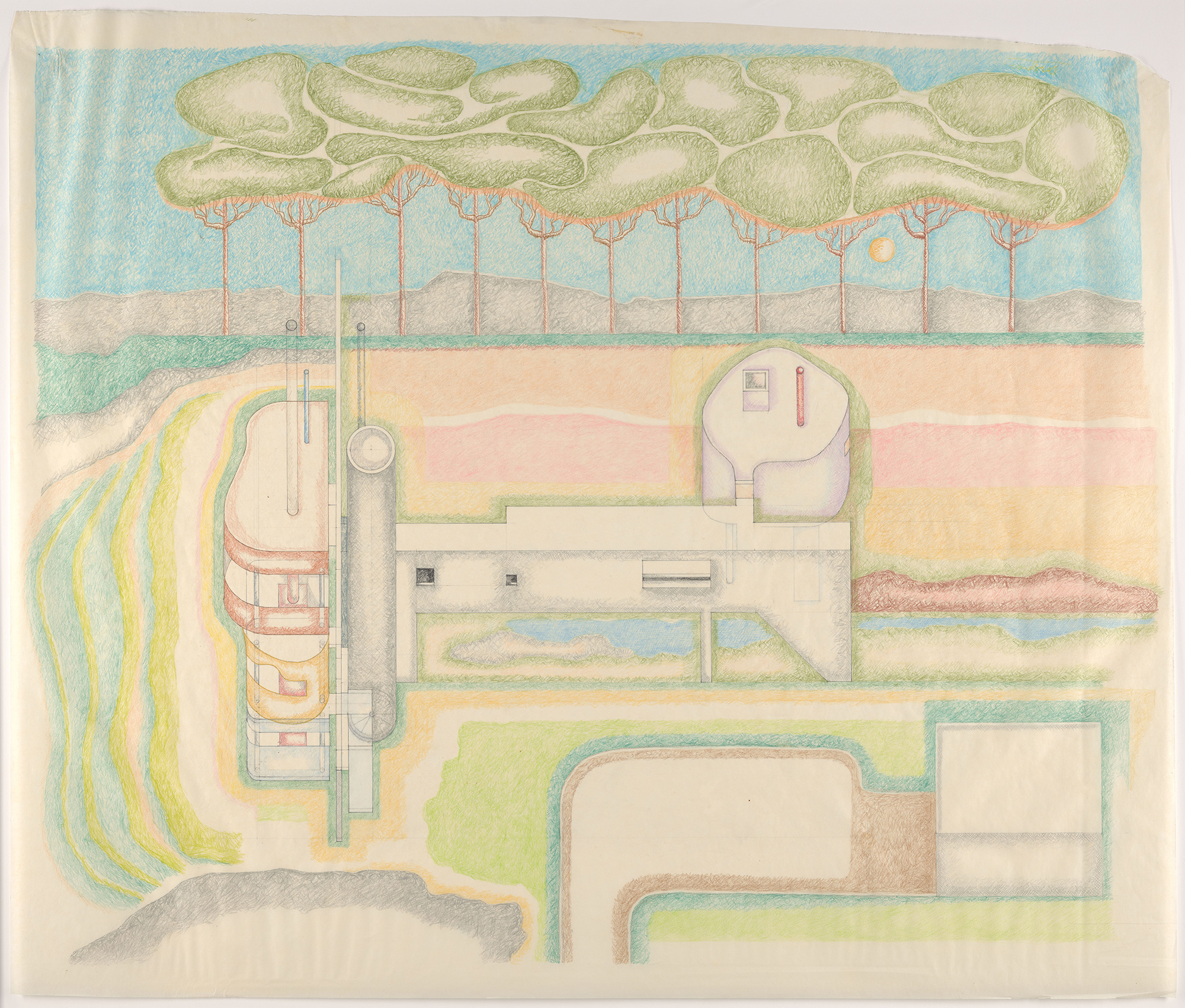
John Hejduk (1929-2000), Bye House, 1973. Graphite and colour pencils on tracing paper floated on back mat, 876 x 1054 mm. Frances Loeb Library, Harvard Graduate School of Design.
The series of Wall Houses designed by John Hejduk between 1967 and 1974 are widely recognised as a decisive moment in the evolution of late-modernist formal languages in the final third of the twentieth century. The Wall House series is an unprecedented re-imagining of the space, form, and programme, of the single-family house. The Wall House Two-The Bye House-emerged out of an extended conversation with Hejduk’s friend and colleague at The Cooper Union, the landscape architect A. E. Bye. The house was designed as a residence for Bye, to be constructed on a plot of rocky ground in Ridgefield, Connecticut. Together, architect and landscape architect choreographed the approach and the gradual revealing of the house in the landscape. They established and re-framed views, and they created a dialogue between built form and the features of the site. The house and landscape seen together make up a whole, and this synthetic whole provokes a new reading of Wall House Two...